The Media Planning tool ChatGPT couldn't be

Silverpush

Year

2025

Duration

6 Months

Media planners had no dedicated tool for contextual campaign planning. They were stitching together briefs using ChatGPT, historical files, and four open tabs. Silverpush had the proprietary contextual data no generic AI tool could replicate. I designed the platform end to end, from a conversational AI brief to a per-platform forecast, across YouTube, TikTok, Meta, Programmatic Web, and CTV. Campaign execution rate improved from 72% to 84% through three post-launch iterations

Contributors
Product Head
Senior PM
Associate PM
Data Science team

TLDR;

Media planners were building campaign targeting strategies using ChatGPT, old Excel files, and a lot of hope. Not because they wanted to, but because nothing better existed for contextual planning across multiple platforms.

Silverpush had what no one else did: proprietary contextual signal data across YouTube, TikTok, Meta, Programmatic Web, and CTV. My job was to turn that data advantage into a product planners would actually open every morning.

What started as a trending dashboard for one client became a full AI-assisted campaign planning platform in six months. It shipped. It went to sales. Campaign execution rate jumped from 72% to 84% after three post-launch iterations, each one grounded in how real planners were actually using it

5 Channels

5 Channels

All 5 channels to choose from in one flow

All 5 channels to choose from in one flow

4 Steps

4 Steps

Easy steps starting from brief to forecast

Easy steps starting from brief to forecast

4 Steps

Easy steps starting from brief to forecast

84%

84%

Execution rate jumped from 72% to 84%

Execution rate jumped from 72% to 84%

2 Paths

2 Paths

Completely AI-Assisted and Manual if needed

Completely AI-Assisted and Manual if needed

Completely AI-Assisted and Manual

The Problem

Ask a media planner how they build a campaign targeting strategy and you will hear the same story: open Reach Planner for YouTube, switch to TikTok Ads Manager for interests, dig out last quarter's campaign file, open a blank spreadsheet, and start typing.

Four tabs. No connection between them. No live data. No way to see estimated reach before committing to a direction
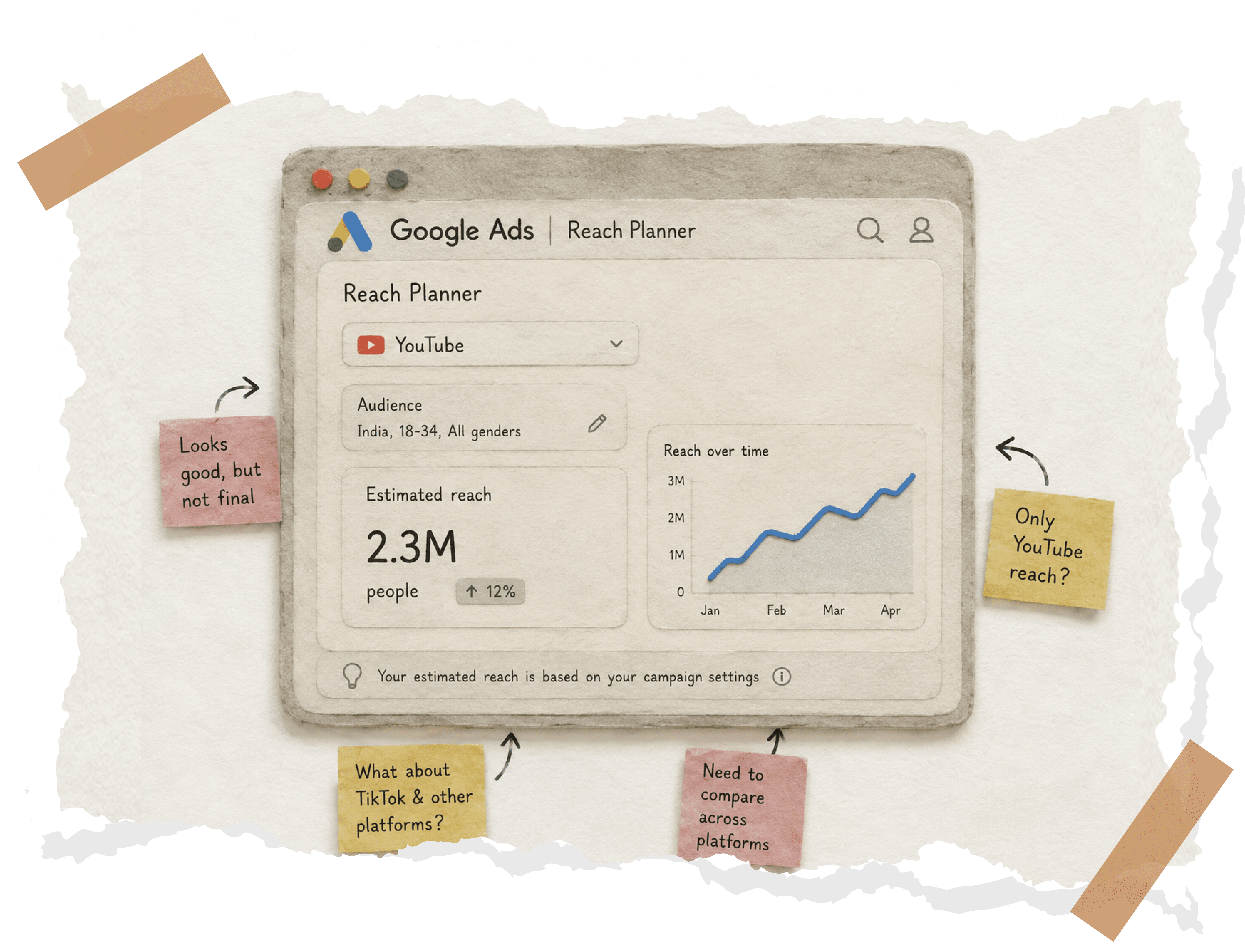
The team identified this not through formal research but through watching what planners were actually doing. They were using ChatGPT to generate tactic ideas, pulling from historical campaign data for context, and stitching it all together manually. Nobody designed this workflow. It was improvisation born out of necessity

The pain was real enough to drive workarounds. That is usually the clearest signal a product needs to exist

The Opportunity Silverpush Saw

Silverpush is one of a handful of contextual targeting platforms with proprietary signal data across multiple platforms simultaneously. That data was already powering client campaigns. The gap was that planners had no way to access it before campaigns were briefed to platforms. A dedicated planning tool could change that

How This Actually Started

Project Origin

In September 2024, Etsy commissioned a "Trend Intelligence Dashboard" to track trending topics across YouTube, Meta, TikTok, and OpenWeb

The Intelligence-Action Gap

While building the dashboard, it became evident that while clients had the intelligence, they were still manually executing planning decisions in spreadsheets rather than within the tool

Actionable Design

User feedback revealed that "clickable" topic chips were not actionable. This led to a design pivot where chips were replaced with a numbered list featuring color-coded momentum indicators

Implementation

This new design was applied to the Campaign Planning Suite and backported to the original Etsy dashboard to ensure consistency and usability

Who This Was Built For

Two types of people needed this product. I used both throughout the project to pressure-test design decisions and push back when features served the product vision more than the person using it

3 Attempts Before The One

The final product looks clean and obvious. Getting there meant going through two directions that did not work, advocating for decisions that were not always the popular call in the room, and rethinking the fundamental structure of the flow more than once

Panel 1 of 3

Attempt 1: The Persona Dashboard

First direction was inspired by a platform called Mindlink. Named audience archetypes, Believer, Geek, Trailblazer, Explorer, Free Spirited, Ambitious, with personality sliders. Visually interesting. Functionally disconnected from how media planners actually work. Planners do not buy audiences called Trailblazer

They buy placements, hashtags, and interest categories. I raised this early. The CEO's feedback confirmed it. Direction dropped

Attempt 2: The Heavy Brief approach

Second direction kept the AI chat but asked too much upfront. Brand name, product, industry, geographic market, flight dates, campaign objective, target audience, exclusions, niche targeting preferences, contact list language. All before generating anything. The targeting sheet that followed was a dense paginated table

Planner feedback came back through the CS team: too heavy. It felt like filling out a compliance form, not building a campaign strategy.

Attempt 3: What shipped

The structural pivot: platform selection first, not brand details. The AI chat became lighter, asking only for brand name and geography. Two questions. Strong output. In every meeting where the instinct was to collect more upfront, my argument was the same: every additional field before the planner sees value is a field that increases the chance they abandon the flow

The homepage went through multiple visual rounds too. Chip buttons looked interactive but led nowhere.

How I solved it

Four steps. Two entry paths

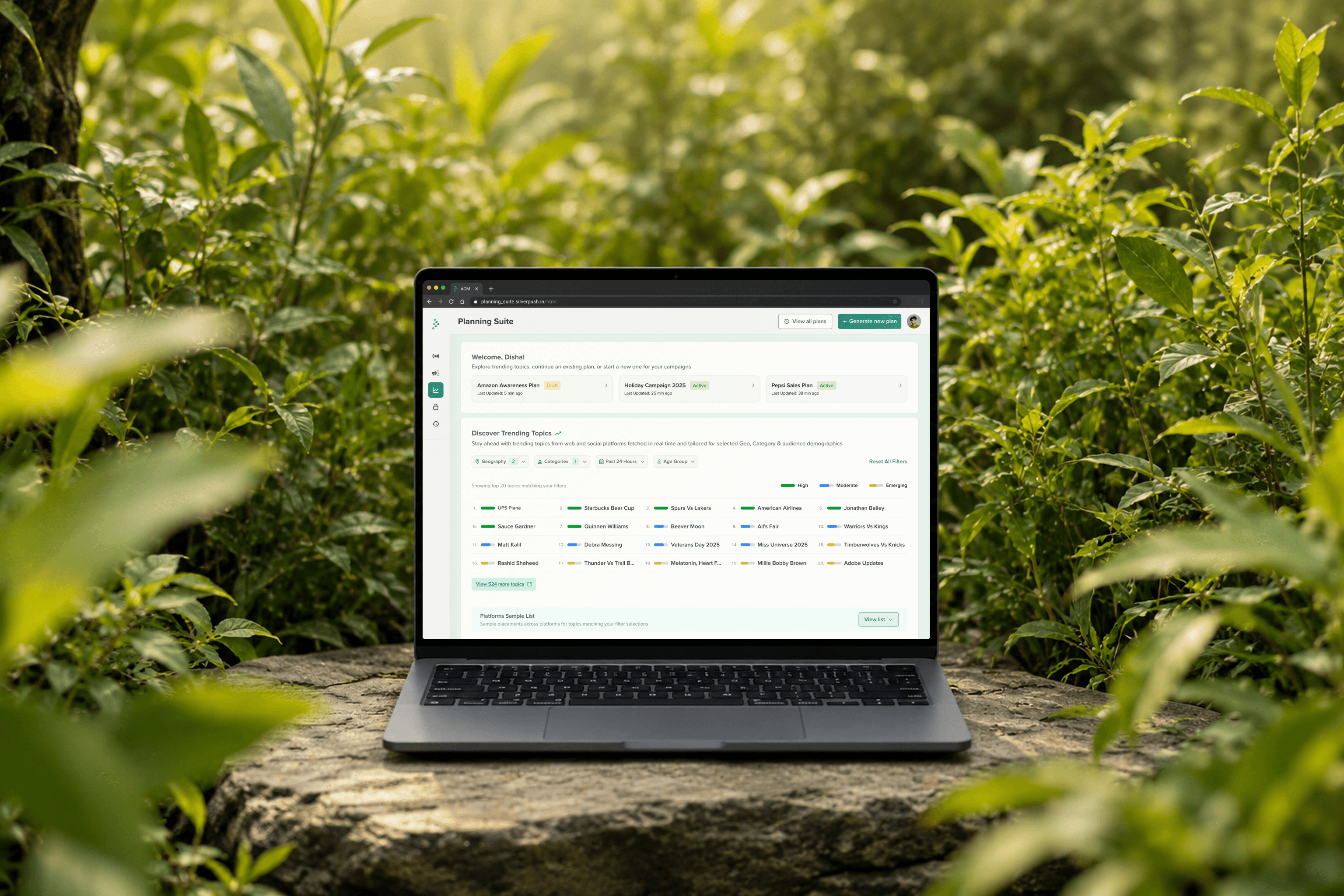
Homepage

Two states, one page. New users get orientation. Returning users get back to work. Trending Topics and Minted Segments give planners passive intelligence while they decide what to work on

Step 1: Input Details

Platform first, not brand first. AI asks two questions: brand name and geography. Fewer inputs, stronger output

Two paths from here. AI path goes through Steps 2, 3, 4. Skip to Segments jumps straight to Step 3 with a manual segment library, no AI involved. Same destination, different levels of control

Step 2: Select Tactics (With AI Path)

Live avails gauge updates as you select. No waiting until the end to know if the plan is strong. Custom tactic creation is two steps: pick segments first, name it after

Step 3: Review Targeting Sheet

Three columns: tactic list, signal detail, avails panel. Each concern persistent, nothing stacked. For the AI path, planners refine what was generated. For the Skip to Segments path, planners build from scratch using the segment library

Geography must be set first or the library stays locked. Trending tactic is the exception on both paths. No fixed signals, topics refresh when the campaign goes live. Brand safety at the bottom, plain language, optional

Step 4: View Forecast and Save

Each platform gets its own forecast because each platform has different metrics that matter. Finalise Plan auto-populates from Step 1. Plan exits as Execute, Edit, or Regenerate

The Boring Stuff That Matters

Two types of people needed this product. I used both throughout the project to pressure-test design decisions and push back when features served the product vision more than the person using it

What Changed After It Shipped

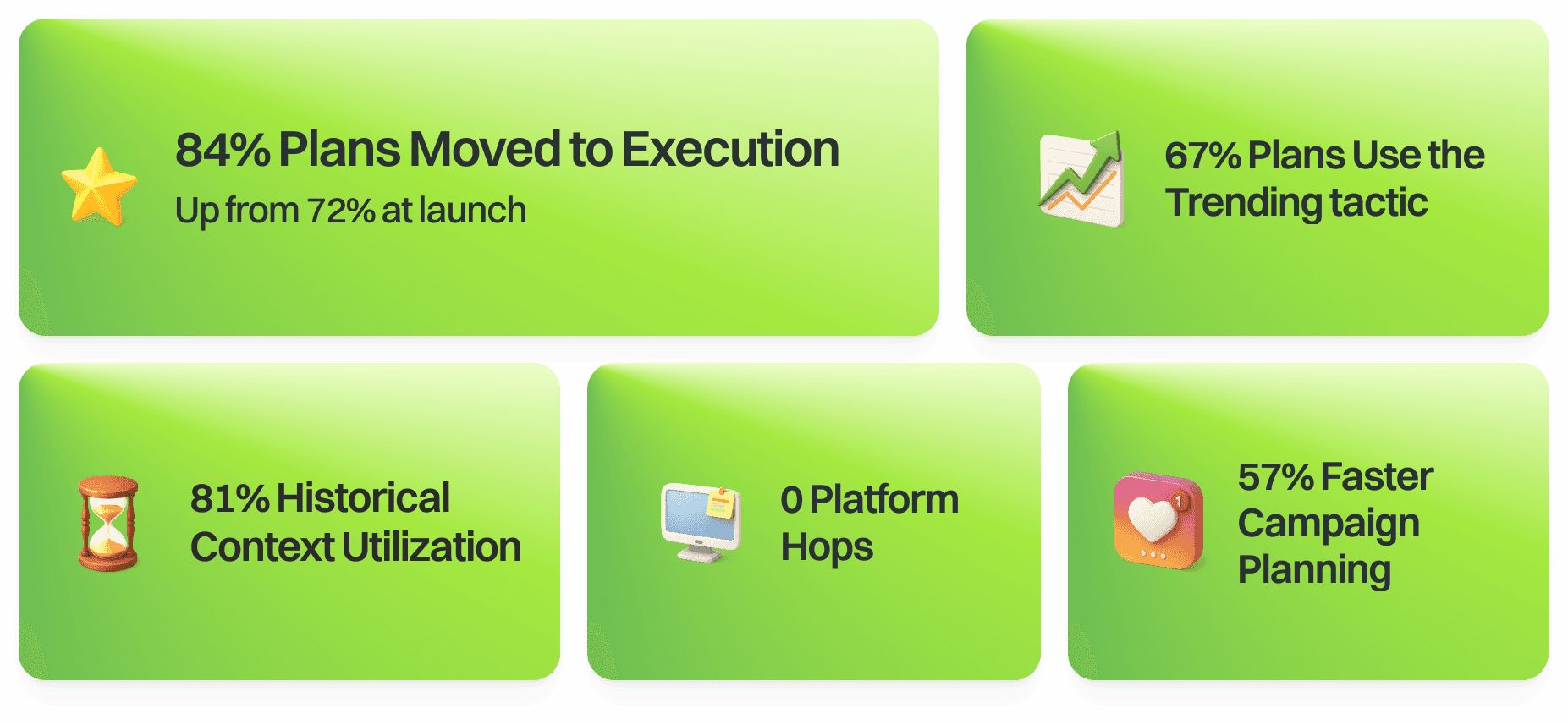
Net-new product, no prior tool to compare against. Six numbers tell the story so far

84% Plans Moved to Execution

Up from 72% at launch

67% Plans Use the Trending tactic

81% Historical
Context Utilization

0 Platform Hops

57% Faster Campaign Planning

84% Plans Moved to Execution

Up from 72% at launch

67% Plans Use the Trending tactic

81% Historical
Context Utilization

0 Platform Hops

57% Faster Campaign Planning

The product shipped, is in active sales, and the Etsy Trend Intelligence Dashboard that started all of this is live and updated to match the Planning Suite's visual system. The prototype built before development began held up under investor and sales demos without a facilitator

Self-serve adoption, tool displacement, and revenue contribution are the next layer being tracked. Early signals: self-serve plan creation sits around 38% with a target of 60%, and campaign spend planned through the Suite is at 41%, with a target of 75% as adoption matures.

Where Things Stand Now

A product that did not exist nine months ago
  1. Started with prototype held up under investors and sales demos without a facilitator

  1. Product shipped, in active sales

  1. Etsy dashboard live and updated to match the Planning Suite

  1. Execution rate up 12 percentage points through three iterations

Best viewed on desktop. Switch over for the full case study

Lets

design

build

create

together!

Social

DISHA K

Lets

design

build

create

together!

Social

DISHA K

Lets

design

build

create

together!

Social

DISHA K

Album cover
Now Playing
In Motion
0:000:00